


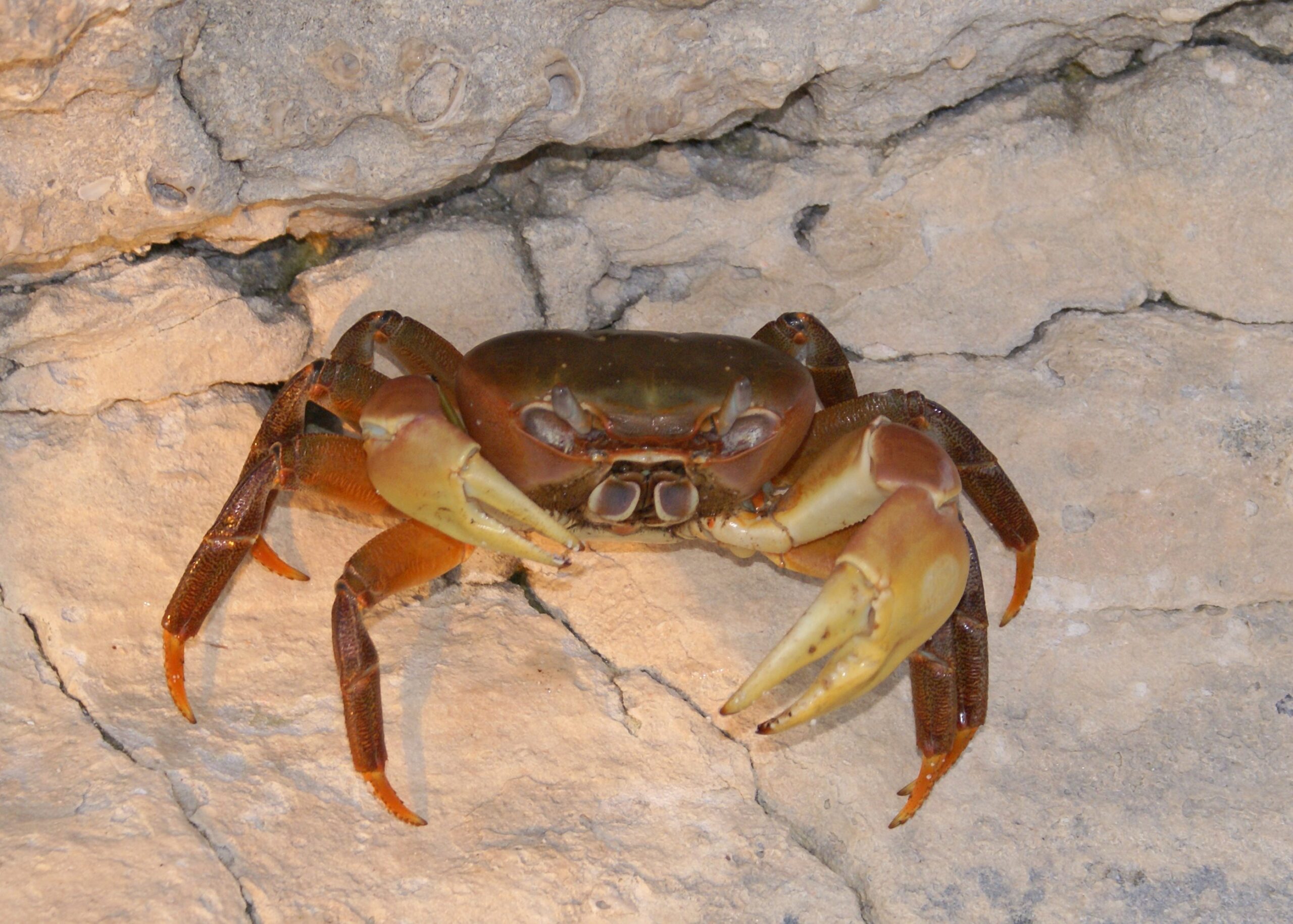
Koh Tachai is not only blessed with white sandy beaches and turquoise waters, but also a unique island “star” that is equally remarkable: the Chicken Crab of Koh Tachai (locally known as Poo Kai), a large land crab that primarily lives on land but has a deep ecological connection to the sea.
Table of Contents
The Chicken Crab of Koh Tachai: Andaman Sea Local Wildlife
The Chicken Crab (often associated with large land crab species such as Cardisoma spp.) gets its name from a distinctive sound that resembles a chick’s chirp. This sound is created by rubbing its front claws together, a behavior known as stridulation, commonly observed during mating season or territorial defense.
Key Characteristics and Life Cycle of the Koh Tachai Chicken Crab
The Chicken Crab is a large terrestrial crab with a carapace width of approximately 8–20 centimeters. Its claws are asymmetrical, with one claw noticeably larger and stronger.
Life Cycle of the Koh Tachai Chicken Crab
- Juvenile stage: Begins life in the sea
- Adult stage: Migrates onto land, digging burrows in coastal forest areas
- Diet: Feeds on plant debris, fallen leaves, and organic matter, acting as a natural decomposer that helps maintain ecological balance
The Chicken Crab of Koh Tachai: An Indicator of Ecosystem Health
The presence of a healthy Chicken Crab population reflects a clean and undisturbed environment, as the species requires balanced ecosystems both on land and in the sea.
Responsible Photography Techniques for the Koh Tachai Chicken Crab
The Chicken Crab is shy and highly sensitive to disturbance. Photographing the Koh Tachai Chicken Crab must always prioritize ethics and wildlife conservation, especially within a protected national park.
Photographing the Koh Tachai Chicken Crab Without Disturbing Wildlife
- Use a macro or telephoto lens
Photograph from a distance to avoid disrupting natural behavior. - Use soft, diffused lighting
Avoid harsh direct flash, which may frighten the crab. - Practice patience and observation
Wait quietly at a safe distance; Chicken Crabs are most active in the evening or at night. - Do not touch or feed
Follow National Park regulations strictly to avoid altering wildlife behavior.
⚠️ Important Caution When Photographing the Koh Tachai Chicken Crab
The Chicken Crab is a land animal that breathes through gills. Placing the crab into seawater for photography can cause drowning and death. Ethical wildlife photography means respecting the animal’s natural environment at all times.
Conclusion: The Chicken Crab of Koh Tachai, a Natural Star Worth Respecting
The Chicken Crab of Koh Tachai is not just an island “star,” but a living symbol of a healthy and balanced ecosystem. Capturing its image responsibly helps promote conservation awareness and preserves Koh Tachai’s natural beauty for future generations.